

 LOGIN
LOGIN


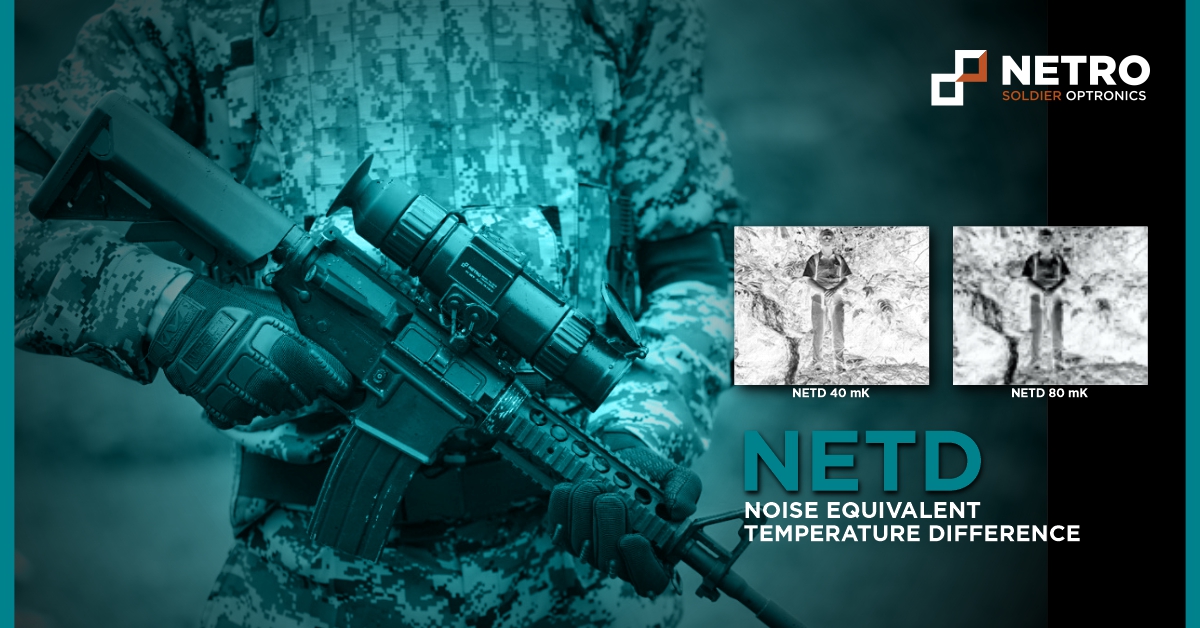


In military applications, thermal imaging devices are widely used for night surveillance, live object detection in rescue operations, targeting and range identification, and thermal mapping. Thermal imagers can be used for object identification in worst day-night conditions like high humidity, and foggy and hazy conditions whereas the image intensification technology work only in a low light environment. Military thermal imagers are developed with the ability to image at night without additional illuminators.
What is NETD & How is it measured?
Thermal devices facilitate non-destructive temperature monitoring of multiple objects in a single frame. The sensitivity of the thermal detector determines the minimum temperature difference between the background and the object that can be distinguished. Noise Equivalent Temperature Difference (NETD) determines the level of thermal sensitivity of a thermal device. The lower the NETD value, the higher the sensitivity, producing a more detailed image.
NETD helps in determining the effect of system noise on the thermal response of the device. This is the key parameter used to test the merit of a thermal device. It is the signal-to-noise figure that represents the temperature difference between the object and background, which would produce signal voltage equal to the camera’s effective temporal noise. NETD expresses the temperature difference required to get a signal-to-noise ratio of unity. It, therefore, represents approximately the least temperature difference at which the camera can work out. Figure 1 depicts the state of a system’s noise voltage and signal voltages.
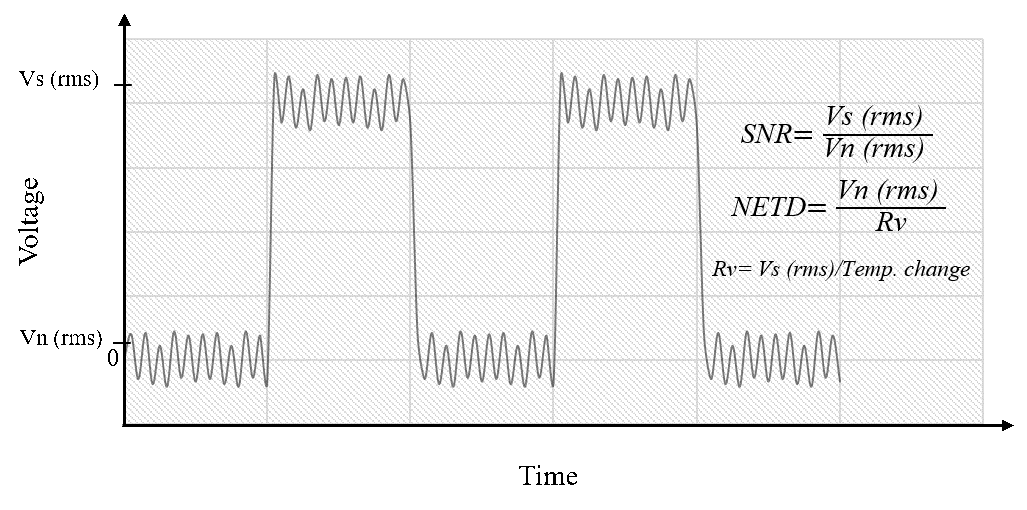
Figure 1. Illustration of SNR and NETD using system signal and noise voltages.
The successful operation of thermal Imagers requires minimum radiative power that could induce temperature difference (ΔT) in a scene for which Vs (rms) > Vn (rms), or ΔT > NETD.
NETD is calculated by dividing the temporal noise by the responsivity of the sensor and is usually expressed in units of milli-Kelvins (mK), for military applications preferred choice of NETD is up to 50 mK. The value is a function of the camera’s f/number, signal integration time, and the temperature at which the measurement is made.

Related
Blogs
Thermal Imaging The Future of Surveillance and Warfare

Innovation sets the foundation for progress and we firmly believe in innovating for a better future for our forces. At MKU, this innovation is driven by extensive research and development. Raghav Jain, GM, MKU authored an insightful piece about how t....
Prachi Gupta
30/01/2023
Important parameters of thermal imaging systems

Thermal weapon sights provide the ability to establish the target, aim, and shoot with pinpoint accuracy over longer distances at night. Several innovative products are being developed by MKU through constant research and development. With advanced p....
Prachi Gupta
17/02/2023